QR Code Asset Tags in Kenya
Custom QR Asset Tags for Equipment Identification, Tracking and Verification
Give every physical asset a unique digital identity with QR code asset tags in Kenya.
Novamark provides custom QR asset tags for organisations that need a practical way to identify, verify and manage equipment, furniture, IT assets, machinery and other fixed assets.
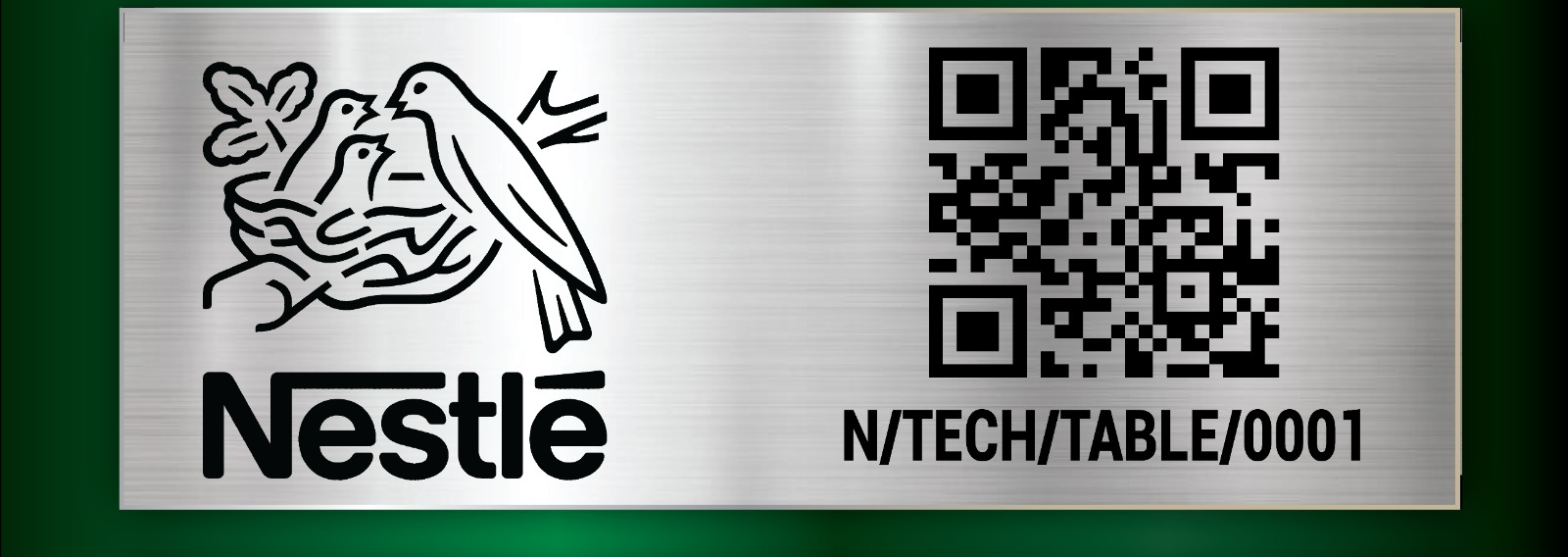
Each tag can combine a unique asset number, QR code, company name or logo to make individual assets easier to identify and scan.
A QR code gives your team a simple way to connect a physical item to the information stored in your asset management system, asset register or digital record.
Instead of searching through spreadsheets to identify an item, staff can scan the QR code on the asset and use the resulting information as part of the organisation's asset verification and management process.
Need QR code asset tags in Kenya? Contact Novamark for a quotation.

What Are QR Code Asset Tags?
A QR code asset tag is a physical identification label containing a QR code and information that uniquely identifies an asset.
The tag is attached directly to an item such as:
- Laptop
- Desktop computer
- Printer
- Office furniture
- Generator
- Machinery
- Medical equipment
- Electrical equipment
- Vehicle
- Tools
- Appliances
- Institutional equipment
The QR code can be associated with the asset's digital record, allowing authorised users to scan the tag and retrieve the relevant information according to the system being used.
The tag can also display a human-readable asset number so that an asset remains identifiable even when someone is not using a scanner.
QR Asset Tags for Fixed Asset Management
A good asset tagging system starts with one simple principle:
Every asset should have a unique identity.
QR asset tags help organisations establish that identity physically.
For example:
Company: ABC Limited
Asset ID: ABC/ICT/002548
QR Code: [Scannable Code]
The physical tag is then associated with the corresponding asset record.
That record may contain information such as:
- Asset description
- Asset number
- Serial number
- Location
- Department
- Assigned user
- Purchase information
- Asset category
- Condition
- Maintenance information
- Warranty information
The exact information available after scanning depends on the asset management system or digital record connected to the QR code.
Aluminium asset tags
Why Businesses in Kenya Are Switching to QR Code Asset Tags
1. Scan Assets With a Smartphone
QR codes are designed to be scanned using cameras and compatible scanning applications.
This can make field identification convenient for teams that already use smartphones during asset verification.
2. Give Every Asset a Unique Identity
Each tag can carry a unique asset identifier so that individual items can be distinguished within a large asset register.
3. Connect Physical Assets to Digital Records
A QR code can provide a bridge between the physical asset and its corresponding digital information.
4. Support Asset Verification
During an asset verification exercise, staff can scan the tag and compare the physical item with the information recorded for it.
5. Reduce Manual Searching
Instead of relying entirely on handwritten numbers or searching through long asset lists, scanning can help users quickly identify the corresponding record.
6. Support Asset Audits
A properly implemented QR tagging system can make physical asset verification more structured and easier to repeat.
7. Improve Asset Identification
A visible asset number combined with a QR code gives staff two ways to identify the item.
QR Code Asset Tags for Asset Verification in Kenya
Asset verification is one of the most practical applications for QR asset tags.
During an asset verification exercise, a team may need to establish:
- Does the asset physically exist?
- Is the asset at the recorded location?
- Is the asset assigned to the correct department?
- Does the asset number match the register?
- What is the asset's current condition?
- Is the item still in use?
- Has the asset moved?
- Does the asset require an update to its record?
A QR code can make the identification stage faster by allowing the team to scan the physical tag and retrieve the relevant record.
This is particularly useful for organisations with hundreds or thousands of assets distributed across offices, departments or locations.


QR Code Asset Tags for Fixed Assets
QR tags can be used for a wide range of fixed assets.
IT Equipment
- Laptops
- Desktop computers
- Monitors
- Printers
- Servers
- Networking equipment
- UPS systems
Office Equipment
- Photocopiers
- Projectors
- Telephones
- Office electronics
- Other business equipment
Furniture
- Desks
- Office chairs
- Cabinets
- Tables
- Shelving
Industrial Equipment
- Machinery
- Generators
- Pumps
- Electrical equipment
- Production equipment
Institutional Assets
- School equipment
- Hospital equipment
- Laboratory equipment
- NGO assets
- Government equipment
- Church and organisational assets
Vehicles and Equipment
Where the selected tag material and fixing method are suitable, QR identification can also be used for vehicles, tools and equipment that require a visible asset identity.
QR Code Asset Tags for Schools and Educational Institutions
Schools, colleges and universities may have large numbers of assets spread across classrooms, offices, laboratories, libraries, workshops and other facilities.
QR asset tags can help identify:
- Computers
- Desks
- Chairs
- Laboratory equipment
- Projectors
- Printers
- Office equipment
- Workshop equipment
- Library equipment
Each item can be assigned a unique asset ID and associated with the institution's asset register.
This can support periodic asset verification and accountability.

QR Code Asset Tags for Hospitals and Healthcare Facilities
Healthcare facilities often manage equipment across wards, laboratories, theatres, offices and other departments.
QR asset tags can provide a consistent identification method for equipment such as:
- Medical devices
- Laboratory equipment
- Computers
- Printers
- Office furniture
- Electrical equipment
- Facility equipment
Where the organisation has an appropriate digital asset system, scanning the QR code can help staff access the corresponding equipment record.
QR Code Asset Tags for Businesses
Businesses can use QR asset tags to create a consistent identification system across their physical assets.
They are particularly useful for organisations managing:
- Multiple departments
- Multiple offices
- Large equipment inventories
- Distributed locations
- IT equipment
- Machinery
- Furniture
- Vehicles
- Field equipment
The goal is simple:
Know what you own, identify it quickly and keep the physical asset connected to its record.
QR Asset Tags for Asset Registers
A QR tag does not replace an asset register.
Instead, it helps connect the physical asset to the asset register or digital record.
For example:
Physical Asset
Laptop → QR Asset Tag → Scan
Digital Record
Asset ID → Description → Serial Number → Location → User → Condition
This connection can make physical verification more practical, especially when an organisation has a large number of assets.
QR Codes and Asset Management Software
QR asset tags can work alongside asset management software where the software supports QR-based identification.
The QR code may point to:
- An asset record
- A web-based asset profile
- A digital inventory record
- An asset management platform
- A controlled information page
- Another approved digital destination
The important consideration is not simply generating a QR code.
The QR code needs to be properly linked to the organisation's asset identification process.
If your organisation uses asset management software, confirm how QR codes will be generated, assigned and scanned before production.
Asset Management Software in Kenya
Custom QR Code Asset Tags
Novamark can produce QR asset tags according to your organisation's identification requirements.
Depending on the project, the tag artwork can include:
- Company logo
- Company name
- Unique asset number
- QR code
- Asset category
- Serial number
- Contact information
- Identification instructions
- Other approved information
The objective is to create a tag that is easy for your staff to recognise and use.
Sequential QR Asset Tags
Large asset inventories require careful numbering.
For example:
NOV/ICT/0001
NOV/ICT/0002
NOV/ICT/0003
NOV/ICT/0004
Each physical asset can receive its own unique identifier and corresponding QR code.
Sequential numbering helps maintain consistency across the asset register and reduces the risk of assigning the same asset ID to two different items.
For large orders, provide your required asset numbering structure or asset list so the tag production can be aligned with your identification system.

QR Code Asset Tags With Company Logo
Your asset tags do not need to look like anonymous labels.
A customised QR asset tag can incorporate your organisation's:
- Logo
- Name
- Brand identity
- Asset numbering format
This makes the tag easier to recognise as an official company or institutional asset.
A typical layout could contain:
COMPANY LOGO
FIXED ASSET
ASSET ID: ABC/IT/004521
[QR CODE]
The final design should balance branding with QR readability.
Choosing the Right QR Asset Tag Material
The material should be selected according to where the tag will be used.
Office and Indoor Assets
For laptops, computers, desks, printers and other indoor equipment, a suitable adhesive asset label may be sufficient.
Equipment and Machinery
Equipment exposed to more demanding conditions may require a more durable tag material and fixing method.
Outdoor Assets
Assets exposed to sunlight, moisture, dust or frequent handling may require a material designed for those conditions.
High-Value Assets
For valuable equipment where removal is a concern, consider a more permanent or tamper-resistant identification solution.
The right tag is therefore determined by the asset and its environment, not simply by the QR code itself.
QR Code vs Barcode Asset Tags
Both QR codes and barcodes can be used for asset identification.
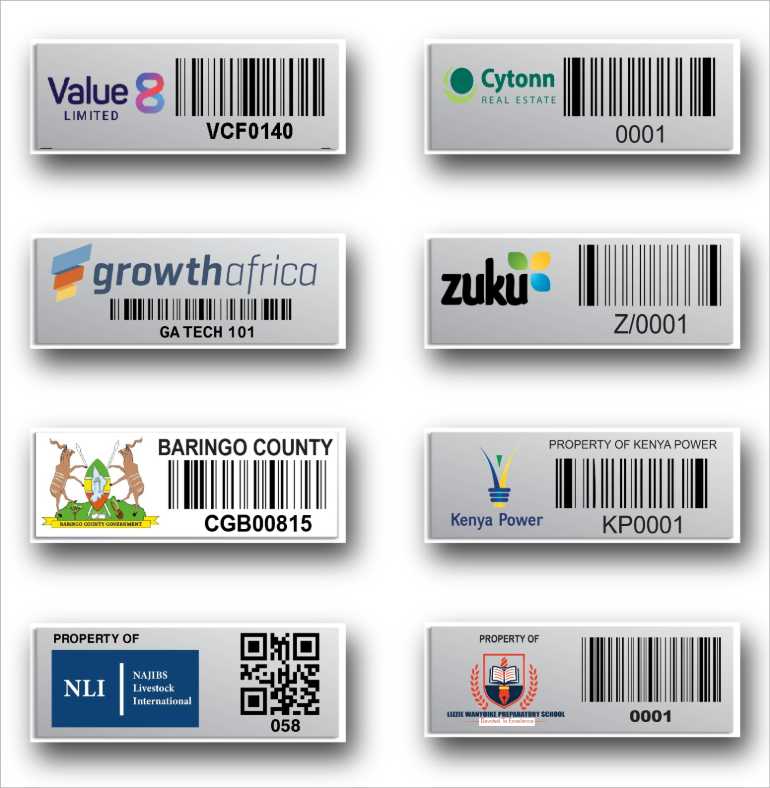
| QR Code Asset Tags | Barcode Asset Tags |
|---|---|
| 2D code | Usually 1D code |
| Can be scanned using compatible smartphone cameras | Commonly scanned using barcode scanners |
| Can encode or link to more information | Often used for a unique asset number |
| Useful for mobile field verification | Useful for structured barcode-based workflows |
| Suitable for digital asset records | Suitable for asset registers and inventory systems |
The better option depends on how your organisation intends to identify and manage assets.
Choose QR Asset Tags When:
- Staff will scan using smartphones
- You want a QR-based identification workflow
- Your software supports QR codes
- You want a compact 2D code
- You want to connect physical assets to digital records
Choose Barcode Asset Tags When:
- Your organisation already uses barcode scanners
- Your asset system is barcode-based
- You have an established 1D barcode workflow
If you are unsure which format is appropriate, explain your existing asset management process when requesting a quotation.
QR Code Asset Tags vs Aluminium Asset Tags
These are not necessarily competing technologies.
QR code describes the identification technology.
Aluminium describes the physical tag material.
An aluminium asset tag can therefore contain a QR code.
Similarly, a suitable polyester or other label material can carry a QR code.
The correct combination depends on the environment in which the asset will be used.
QR Asset Tags for Asset Audits
Asset audits require organisations to compare what exists physically with what is recorded.
QR asset tags can support this process by giving each asset a consistent physical identifier.
During a verification exercise, staff can:
Locate asset → Scan QR code → Identify record → Verify details → Update information where authorised
This can help structure physical verification and reduce reliance on manually searching through asset lists.
A QR tag is therefore most valuable when it forms part of a broader asset management process.
QR Code Asset Tags and Asset Tracking
QR tagging can support asset tracking by giving every tagged item a consistent identifier.
Depending on the organisation's asset management system, the scan may be used to:
- Identify the asset
- Confirm its location
- Check its assigned user
- View asset details
- Support inspections
- Record maintenance
- Update asset status
- Support stocktaking
The QR tag itself does not automatically track an asset's physical location.
The tracking happens through the system and processes connected to the QR code.
This distinction is important when selecting an asset tagging solution.
Who Needs QR Code Asset Tags in Kenya?
QR asset tags can be useful for:
Companies
For fixed asset identification and internal asset control.
Schools and Universities
For equipment, furniture, IT assets and institutional property.
Hospitals
For medical, IT and facility equipment.
NGOs
For accountable asset registers and verification.
Government Institutions
For structured identification and physical verification of public assets.
Banks and Financial Institutions
For IT equipment, furniture and other fixed assets.
Manufacturers
For machinery, production equipment and office assets.
Hotels
For furniture, equipment, electronics and facility assets.
Warehouses
For equipment, handling assets and operational items.
How to Order QR Code Asset Tags in Kenya
Ordering QR asset tags is easier when the identification requirements are defined before production.
1. Determine the Number of Assets
Establish how many assets require tags.
2. Prepare Your Asset Data
Where available, prepare information such as:
- Asset number
- Asset description
- Serial number
- Department
- Location
3. Choose the Tag Type
The appropriate material and fixing method should match the asset environment.
4. Provide Your Logo and Artwork
Send your company or organisation logo and preferred identification layout.
5. Confirm the QR Requirement
Specify how the QR code should relate to your asset records or digital system.
6. Review the Artwork
Check the numbering, logo, text and QR codes before production.
7. Approve the Order
Once the specification and quotation are confirmed, production can proceed.
QR Code Asset Tags Prices in Kenya
There is no single price for QR asset tags.
The final quotation can depend on:
- Number of tags
- Tag material
- Tag size
- Printing requirements
- QR code configuration
- Numbering requirements
- Adhesive or fixing method
- Artwork requirements
- Delivery location
Large asset-tagging projects should be quoted according to the actual asset list and required specification.
If you need QR code asset tags in Kenya, send us the number of assets and your requirements for an accurate quotation.
QR Code Asset Tags in Nairobi and Across Kenya
Novamark provides asset identification solutions for organisations in Nairobi and across Kenya.
Whether you are tagging:
- One office
- Multiple branches
- A school
- A hospital
- A warehouse
- A factory
- A corporate organisation
- A large institutional asset base
the tag specification should be based on the assets and environment being managed.
For large projects, provide your asset list and identification requirements so the QR tagging solution can be planned around your existing process.
Get QR Code Asset Tags for Your Organisation
If your organisation is still identifying equipment manually, QR asset tags can provide a more structured way to connect physical assets with digital records.
From office equipment and computers to machinery, furniture and institutional assets, the right QR tag can make identification and verification easier.
Request a QR Asset Tag Quote
Send Novamark:
- Number of assets
- Asset list, if available
- Preferred tag material
- Logo
- Numbering format
- QR code requirements
- Delivery location
Contact Novamark today for QR code asset tags in Kenya.
Frequently Asked Questions About QR Code Asset Tags
A QR code asset tag is a physical identification label containing a QR code and a unique asset identifier. It is attached to an asset and can connect that physical item to a digital asset record.
They are used for asset identification, verification, inventory checks, fixed asset management and connecting physical equipment to digital records.
QR codes can generally be scanned using compatible smartphone cameras or QR scanning applications. The actual information displayed depends on what the QR code has been configured to link to.
Yes, where the asset management system supports QR-based identification. The QR code can be configured to point to the appropriate digital asset record or destination.
Yes. A QR asset tag can be designed to include a company or organisation logo alongside the QR code and asset identification information.
Yes. Each asset can have its own unique identifier and corresponding QR code.
Neither is automatically better. QR tags can be particularly useful for smartphone-based scanning and digital workflows, while barcodes remain useful for established barcode scanning systems.
Yes. QR tags can support physical asset verification by allowing staff to identify the corresponding asset record during an audit or stocktake.
No. A QR code does not provide automatic GPS tracking. It identifies or links to information about the asset. Actual tracking depends on the asset management system and processes used by the organisation.
The appropriate material depends on the asset's environment. Indoor office equipment may require a different material from outdoor machinery or high-value equipment.
Pricing depends on quantity, material, size, printing, numbering and QR requirements. Request a quotation based on your project specification.
Yes. Novamark serves organisations in Nairobi and across Kenya.
Yes. Novamark serves organisations in Nairobi and across Kenya.
Related Asset Tagging Solutions
Explore other Novamark asset identification solutions: